
2026-11-27
Hybrid Virtual Production: How AI Is Changing the LED Volume
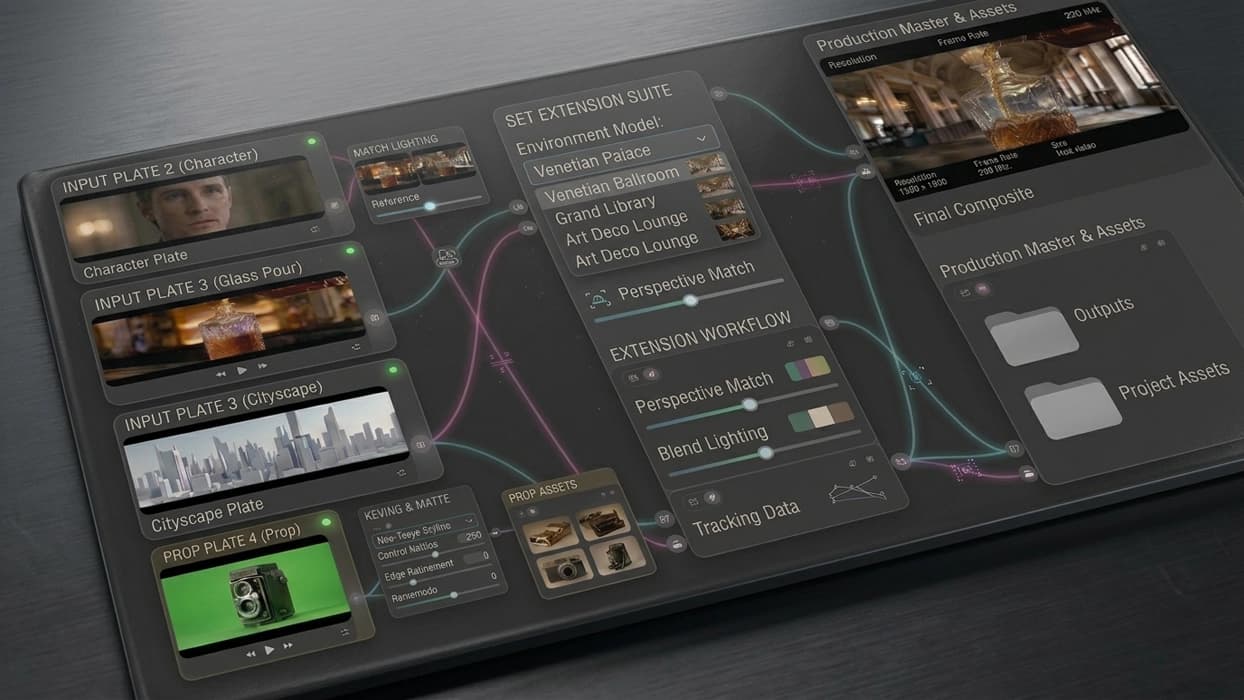
For most of the last five years, virtual production meant one pipeline: build a 3D world in a game engine such as Unreal, play it on an LED volume, and track the camera so the background moves with correct parallax. It works, but the world has to be built first. A virtual art department typically needs 8 to 12 weeks before principal photography, according to Vitrina.
AI is now attacking that bottleneck. Environments can be generated from a prompt, captured from photographs as Gaussian splats, or split into layers from a single image. Lighting can be changed after the shoot. Some finished shots skip the volume entirely. The result is a new kind of hybrid virtual production, where the LED wall, the game engine and AI tools each do the part they are best at.
The industry now has a name for this: real-time hybrid filmmaking. Innovative Dreams, a studio launched in April 2026 by Wonder Project and Luma AI with support from AWS, describes its “Realtime Hybrid Filmmaking” workflow as one that “combines performance capture, virtual production and visual effects, accelerated by generative AI technologies at every stage of production” (Luma). Its first project is The Old Stories: Moses, starring Ben Kingsley, and the team presented the approach at IBC2026 in September. The open community guide HybridFilmmaking.org uses the wider term “hybrid filmmaking” for blending live action with AI, virtual production, VFX and animation in one pipeline, and studios such as HybridFilms.ai now market their services under it.
What real-time hybrid filmmaking means in practice
Warsaw-based Veles Productions describes the model clearly in Definition magazine (May 2026). Real sets and actors sit in the foreground. Traditional 3D, such as Unreal, fills the midground. AI-generated Gaussian splat backdrops sit behind.
Each layer has a different job. The foreground gives real light, texture and performance. The 3D midground gives objects the camera moves around and that need to be lit or animated. The AI background gives photoreal depth at a fraction of the build time. Veles says it is phasing Unreal out of parts of its pipeline as a result.
Other studios use the term more broadly. Be Electric Studios uses it to mean any mix of practical sets, locations, AI-assisted concept work and LED volumes.
Where AI enters the pipeline
| Stage | What AI does | Tools named in coverage |
|---|---|---|
| Planning and previs | Generates rough worlds and shots that directors and DOPs can walk through before a set is built | Intangible, LTX Studio, Runway, Cuebric and Kaiber |
| Environment generation | Text or image to a 3D world, a 2.5D layered plate, or a 360° panorama | World Labs Marble, Cuebric, Blockade Labs Skybox AI |
| Capture to splat | Turns photographs or scans of a real location into a Gaussian splat | XGRIDS PortalCam and L2 Pro, DJI Terra |
| Playback on the wall | Loads splats or layered plates into the engine or media server | Volinga plugin for Unreal, XGrids Unreal plugin, Disguise |
| Image clean-up | Denoises and upscales AI output toward cinema-grade frames | Topaz |
| Relighting | Rebuilds material maps from video so shots can be relit in post | Beeble SwitchLight |
| Final shots | Generates complete VFX shots with video diffusion models | Commercial models under enterprise licences, as used by Netflix’s Eyeline |
Four productions that show how it works
ITV, “The Birthday Draw”. London studio Quite Brilliant used AI-generated backgrounds to shoot 15 different set-ups over five days in one studio, moving from a beach to a suburban street. Virtual production supervisor Russ Shaw told Definition that AI gives “far more realistic” imagery than game-engine approaches. The catch: “You’re not getting full 3D parallax.”
NACZZOS, “Be Like Me” (music video). Shot at Veles Productions’ XR studio, this is one of the most fully documented AI-to-LED pipelines so far. AI stills defined each environment in World Labs Marble. Volinga displayed them as Gaussian splats on a ROE Visual Ruby 1.9 wall, driven by a Megapixel Helios processor. The camera was a RED Komodo-X, tracked with stYpe RedSpy, with set extension widening the frame beyond the wall. The same source images fed Google’s Veo 3 for establishing shots. In Volinga’s own case study, Veles says the time to create and display environments fell “from months to roughly an hour”.
“DOSENMUTTER” (short film). Students at Filmakademie Baden-Württemberg captured a real childhood bedroom from about 4,000 photographs and turned it into a Gaussian splat for an LED wall, writing on the SIGGRAPH blog. AI was used only to denoise the photos and correct focus. It shows the other side of hybrid: AI-assisted capture of a real place, rather than a generated one. The set blocked external tracking, so cameras were locked off and frustums aligned by hand.
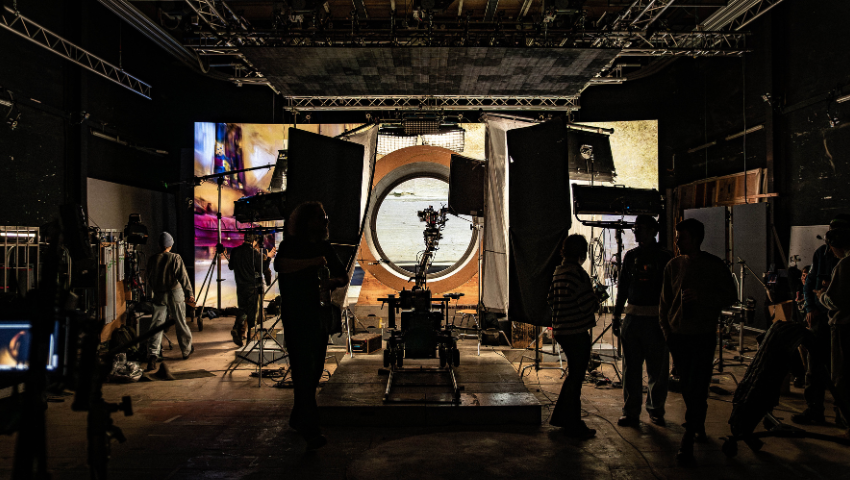
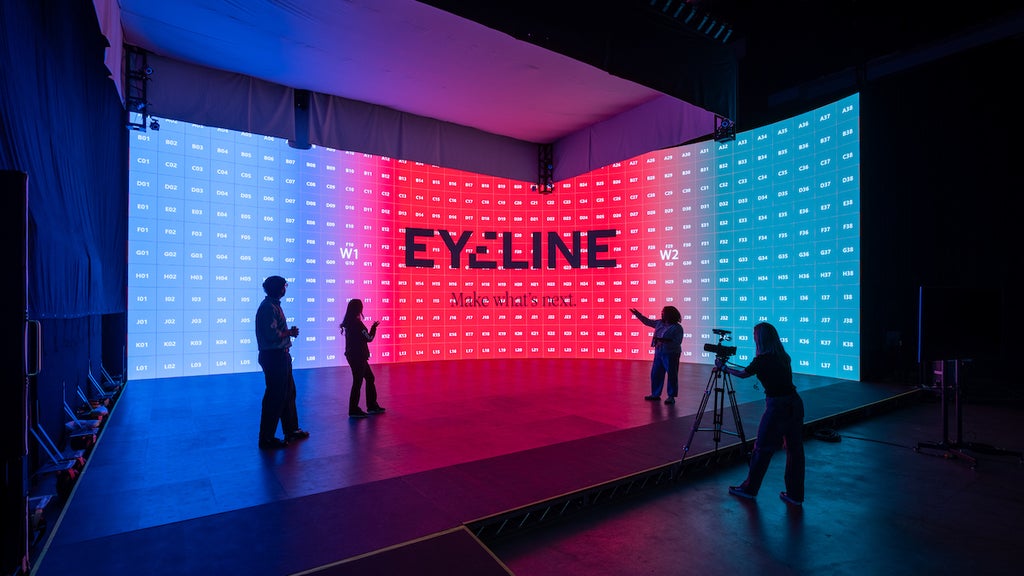
Netflix, “El Eternauta”. Netflix’s Eyeline Studios used generative AI for a building collapse in Buenos Aires. Co-CEO Ted Sarandos said it was the first generative AI final footage in a Netflix original and was finished ten times faster than with traditional tools, reported by IBC. Eyeline’s Kevin Baillie told TheWrap that traditional VFX “would have been like 10x more” in cost. Eyeline now groups virtual production, volumetric capture and generative AI in one division.
Why Gaussian splats matter
A Gaussian splat stores a scene as millions of small, soft points that look different from each angle. On an LED wall that means photoreal backgrounds with real parallax, without modelling every object. Splats can come from a location scan or, increasingly, from a generative world model.
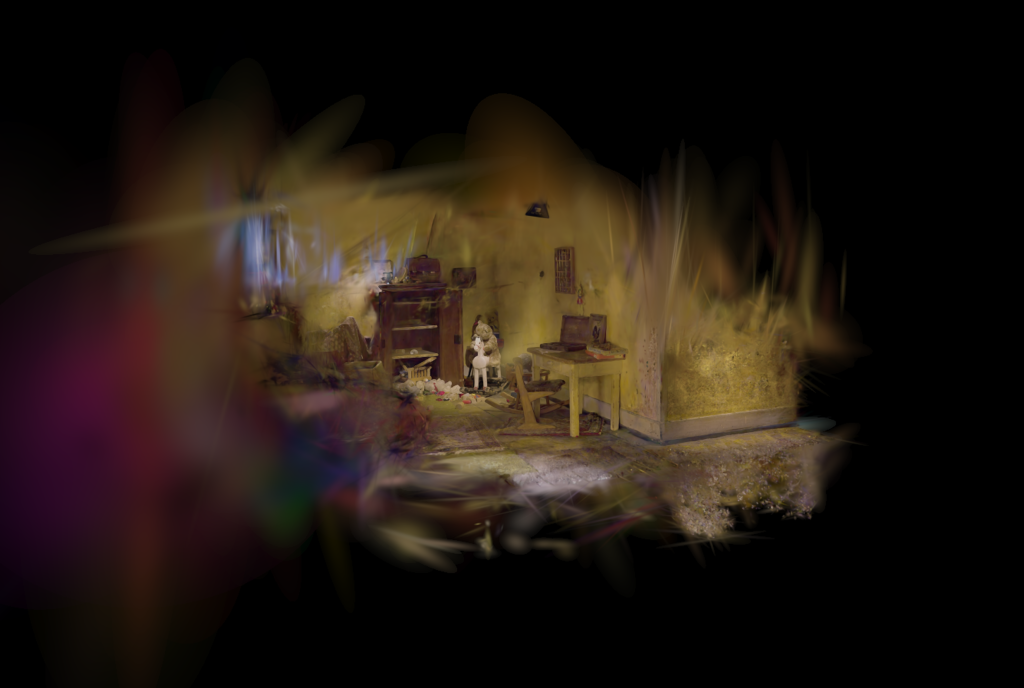
The limits are practical. Splats bake in the lighting of the capture, so they are “not trivially relightable”, panellists noted on VP Land’s Denoised podcast. Teams mix them with geometry, or rebuild parts in polygons, when light has to change. Editing tools are less mature than polygon tools. One US scanning firm reports a mean geometric accuracy of 7.82 cm for its splat captures, which is fine for a background but not for props (The Future 3D, a vendor).
The 2.5D route
Not every shot needs a full 3D world. Cuebric, integrated with Disguise, uses AI rotoscoping and inpainting to split one image into depth layers. Each layer gets a generated mesh, so parallax holds for moderate camera moves. Disguise says a scene can be on an LED stage “in only two minutes”.
Not everyone is convinced. A virtual production professional interviewed for a Breda University report called Cuebric “just another stable diffusion model” and said upscaling did not add real detail. The same report found that AI environments are often replaced before production for quality reasons.
What still goes wrong
- Bit depth. Most generative models output 8-bit images. A camera re-photographing an LED wall exposes banding fast. The ETC short “The Bends” used a staged Topaz pipeline (denoise, upscale, artefact clean-up, then grain) to reach 16-bit EXR (VP Land).
- Perspective and hallucinations. Veles names hallucinations, perspective inconsistencies and limited animation as current limits. Its CEO places Gaussian splatting “somewhere between ChatGPT 2 and 3.5” (Definition).
- Changes on the day. In at least one production pipeline, an AI environment could not be edited once it was on the LED screen (Breda University report). A director’s note on set can mean going back to generation.
- Relighting has rules. SwitchLight is trained on Rec. 709 footage. Beeble’s founder advises against heavy denoising, strong LUTs or oversharpening before relighting, and says flat lighting gives the most control (Digital Production).
- Rights and privacy. The copyright status of AI-generated environments is still unsettled. Studios run models in sandboxes so client material stays private, and work under enterprise licences (Definition, TheWrap).
The UAE picture
The region now has the hardware for this. In September 2026 Gamma Studios opened its Digital Media Centre in Dubai Production City, built around Sony’s virtual production system: a 1.5 mm Sony VERONA LED wall, VENICE 2 and BURANO cameras and OCELLUS camera tracking (press release via MENAFN). Saudi Arabia’s NEOM Media Hub has a 1,200 m² virtual production stage, and Abu Dhabi offers a cash rebate of up to 50%, according to Vitrina.
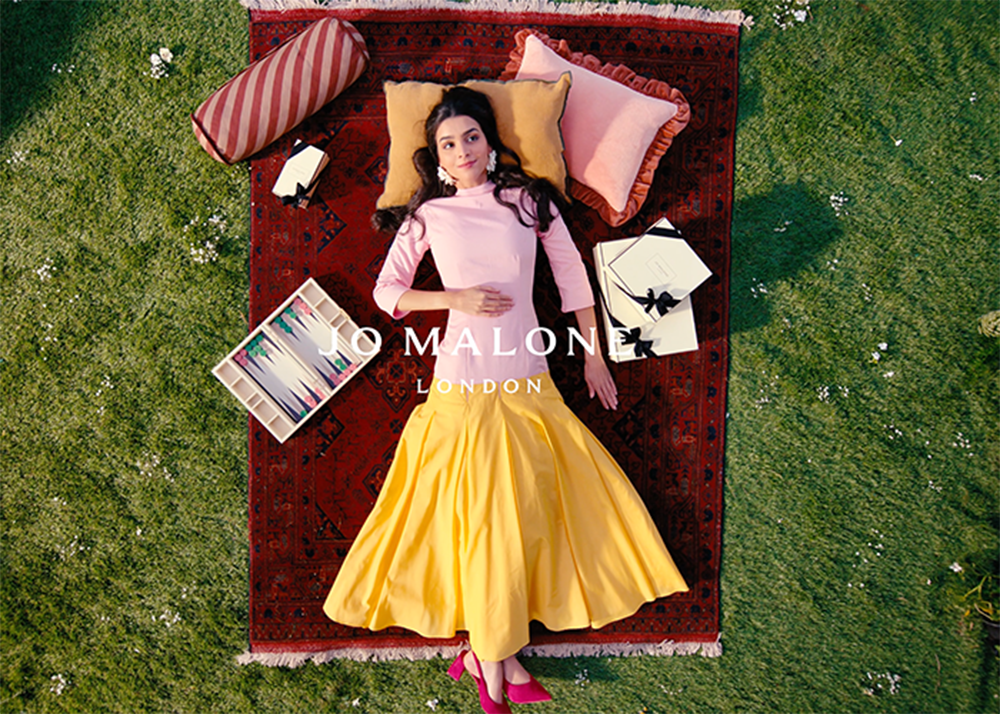
Dubai already had an established volume before that. Pixojam, founded in Dubai in May 2022, runs a curved 18 × 5 m LED wall with an LED ceiling, Mo-Sys StarTracker camera tracking and Sony VENICE 2 cameras, with environments built in Unreal Engine (Mo-Sys). About 95% of its work is TV commercials. Recent jobs include two Jo Malone London campaigns (Campaign Middle East) and the BMW 7 Series global launch, which mixed 360° video plates shot in Singapore, Oman and Dubai with full Unreal scenes (Digital Media Net). Pixojam now also offers what it calls Real-Time Hybrid Filmmaking: its services page describes it as combining “LED volumes, AI tools, and human creativity,” with LED volumes for image-based lighting, performance capture for talent, and AI used to refine the final images. The studio says it is introducing the approach to the region, though the page does not yet name specific tools or productions.
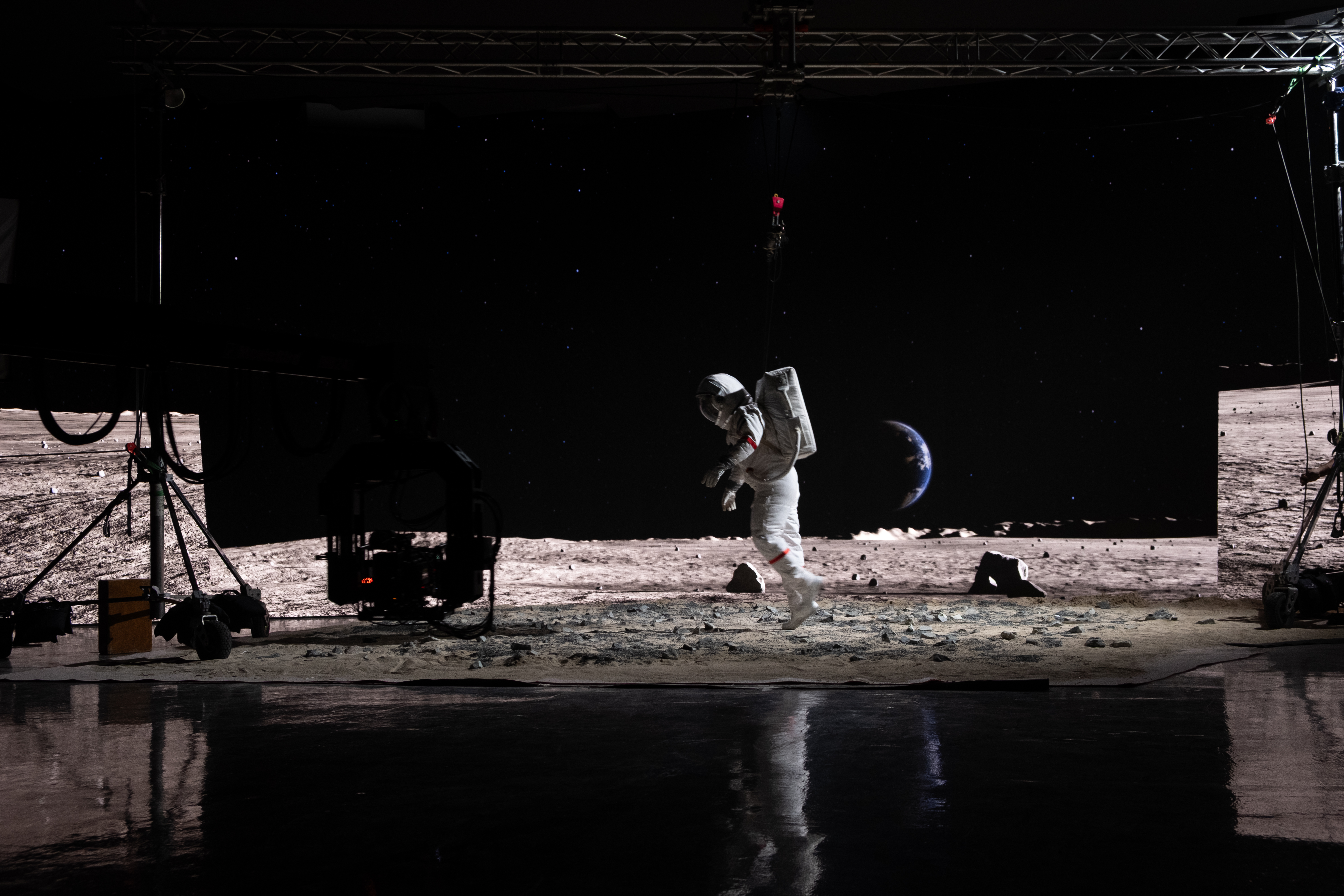
For commercials, which make up much of the region’s production, the appeal is speed. When a world can be generated, approved and on the wall in days rather than weeks, an LED volume becomes realistic for a short campaign schedule, not just a series.
Questions to ask before an AI hybrid shoot
- Which layers are generated, which are captured and which are built in 3D?
- Which shots need full parallax, and which can live with 2.5D?
- What bit depth and colour space are the AI assets delivered in, and do they match the wall and camera pipeline?
- Can the environment be changed on the shoot day, and how long does a change take?
- If light must change in post, are the plates shot to suit relighting?
- Who holds the licence for the models and their output, and where does client material go?
The bottom line
AI is not replacing the LED volume. It is making the volume faster to fill and cheaper to change, and it is moving some shots off the stage altogether. The people closest to the work stay cautious. As Eyeline’s Kevin Baillie put it, “these are tools that need to be driven by real artists with real taste and real artistic ability behind them.”
Cover photo: Pixojam’s LED volume in Dubai, with LED ceiling. Photo: Pixojam.