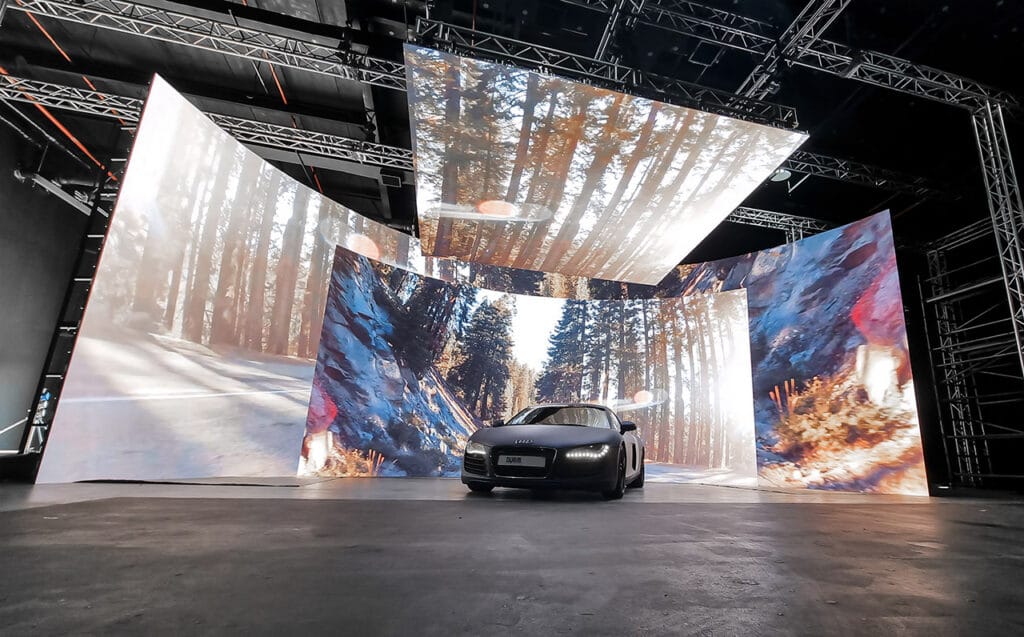
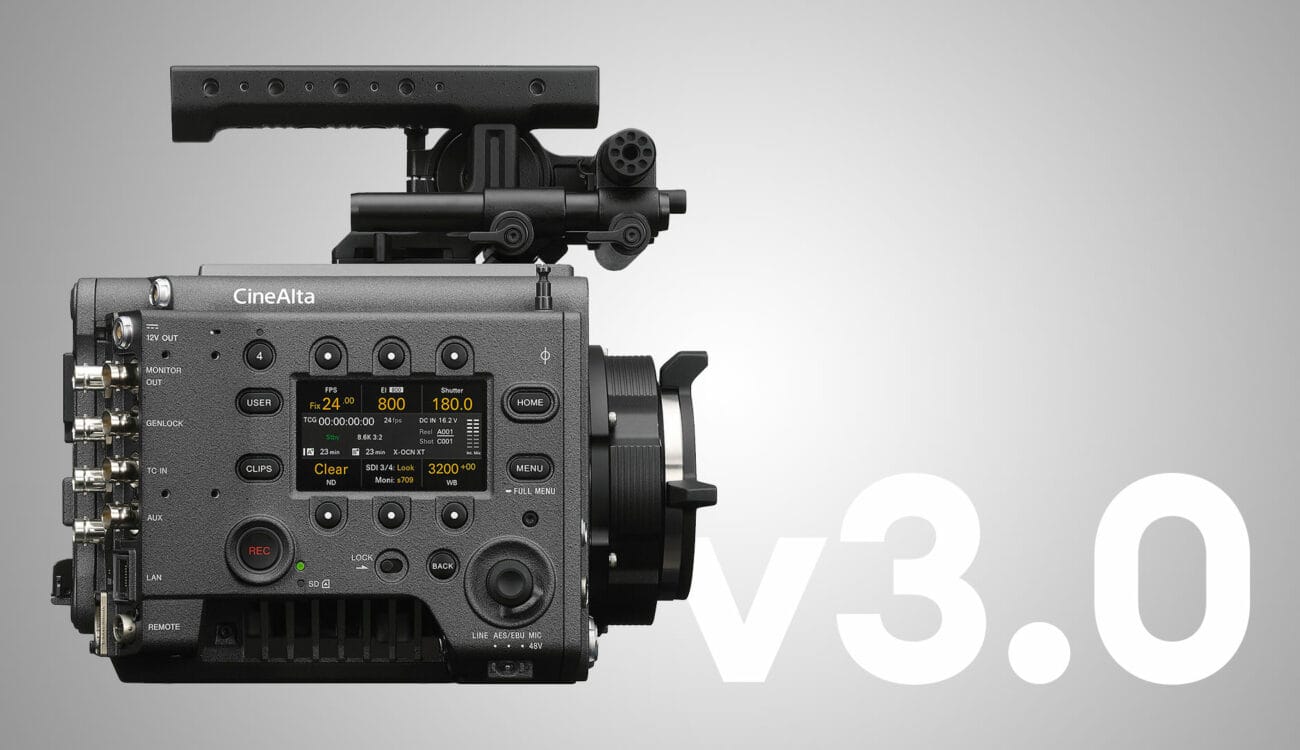
The world of filmmaking is witnessing a revolutionary phase with the advent of virtual production, blurring the lines between the physical and digital realms. The Sony Venice 2, a frontrunner in cinematic technology, has pushed these boundaries even further with its firmware 3.0 update. This update is not just an incremental change; it’s a quantum leap that addresses the intricate needs of modern filmmakers, offering features that significantly enhance the blending of live-action footage with digitally created environments. Let’s delve into these groundbreaking features and their impact on the art of storytelling.
Enhanced Color Fidelity for In-Camera VFX
Central to the firmware 3.0 update is the enhanced color fidelity feature, which fine-tunes the camera’s ability to blend standard production lighting with the vivid hues of LED volumes. This enhancement is pivotal for virtual production, where the harmony between LED-generated backgrounds and live-action elements is paramount. With this update, filmmakers can achieve a seamless visual coherence, ensuring that every frame conveys realism and depth, free from the jarring discrepancies that can detract from the viewer’s immersion.
New Frame Line Generator Tool
Addressing a critical need within virtual production, the new external frame line generator tool is a game-changer. This feature allows for meticulous alignment of digital backgrounds with live-action footage, a must for scenes where digital landscapes extend beyond the physical set. It empowers directors and cinematographers to craft scenes with precision, ensuring the virtual and physical realms coalesce flawlessly, thereby enhancing the storytelling impact.
Improved High Frame Rate Modes
The update extends the Venice 2’s prowess in capturing high-quality slow-motion footage, now allowing for up to 90 fps with 2x anamorphic lenses and introducing a novel 33.333 FPS mode specifically designed to counter flicker at 50Hz. These enhancements afford filmmakers greater creative freedom to explore motion in their narratives, delivering smooth, captivating visuals that elevate the emotional and aesthetic appeal of their work.
Live Cinematic Multicam Enhancements
Reflecting the evolving landscape of live cinematic multicam setups, the firmware 3.0 bolsters the Venice 2’s capabilities in live production environments. With refined adjustments available for saturation, skin detail, white balance, and shutter directly from the paint menu and RM/RCP Control, filmmakers can achieve real-time, dynamic visual consistency across multiple camera feeds—essential for live broadcasts and multicam shoots where visual unity is non-negotiable.
Compatibility and Flexibility
The firmware 3.0 underscores Sony’s dedication to meeting the evolving demands of the filmmaking community. By enhancing compatibility with anamorphic lenses and high frame rates, and by introducing robust tools and features, the Venice 2 stands out as a versatile powerhouse. Its exceptional dynamic range, color accuracy, and internal recording capabilities position it as a vital tool for those looking to push the envelope in virtual production.
The Venice 2 Firmware 3.0: Redefining Filmmaking
The firmware 3.0 update for the Sony Venice 2 is a testament to the transformative power of technology in filmmaking. It not only surmounts the challenges inherent in merging the physical with the digital but also amplifies the creative possibilities available to filmmakers. This update propels the Venice 2 into the forefront of cinematic innovation, making it an indispensable asset for contemporary storytelling and visual effects.
As we navigate through this exciting era of cinematic evolution, the Sony Venice 2, armed with its firmware 3.0 update, is poised to lead the charge. It offers filmmakers not just a tool, but a canvas on which the future of storytelling can be imagined and realized, fostering a new dimension of creativity where the only limit is the imagination.
The Sony Venice 2’s firmware 3.0 update heralds a new dawn in virtual production, marrying technological sophistication with artistic vision. As filmmakers and creators continue to explore this uncharted territory, the Venice 2 stands ready as a beacon of innovation, guiding the way toward new storytelling horizons. With such tools at their disposal, the future of filmmaking is not only bright but boundless.
Version 3.0 update – full release notes
Added virtual production shooting support functions
- When shooting in an environment where background lighting from an LED wall used for in-camera VFX applications and real lighting are mixed, you can improve the color reproduction of human skin tones by setting the color temperature of the LED wall and the mixing ratio of the LED wall lighting and the actual lighting.
- When adjusting the genlock phase, the changed value is now reflected immediately. This makes for easy adjustment of the imaging phase relative to the panel light emission.
Enhanced functionality for live production
- When RM/RCP Paint Control is off (standard mode), you can now set whether to control the white balance function and shutter function from a remote control unit, such as the RM-B170.
- When RM/RCP Paint Control is on, the Look can now be selected as a LUT and applied to various video outputs. The use of User 3D LUT is also supported.
- Saturation and Skin Detail functions have been added. Configurable in the Paint menu when RM/RCP Paint Control is on.
Other improved functions
- An FPS value of 33.33 can now be set when Project Frame Rate is set to 24/25/50.
- Resolved flickering and stuttering issues on the viewfinder screen when Project Frame Rate is set to 23.98/24.00 and the frame rate is set to 60 FPS during variable speed shooting (FPS set to Variable).
- When the imager mode is 5.8K 17:9, Zoom to Fit can now be set to 2.39:1 when the de-squeeze ratio is set to 2.0×. This enables high frame rate (HFR) shooting up to 90 FPS even when shooting on the MPC-3628 with an anamorphic lens.
- Log(Legal) can now be selected as a LUT and applied to various video outputs. This setting enables S-Log3 data output in legal range to external editing equipment.
- Peaking display can now be turned on/off using an assignable button.
- ACES 1.0 Output-Rec.709 can now be selected as a LUT to apply to the Monitor output video and viewfinder screen video when Input Color Space is set to ACEScct.
- Display of a 2.2:1 aspect marker is now supported.
- File data saved in internal memory, such as passwords and User 3D LUTs, can now be reset together with the menu settings by executing Factory Reset in the Maintenance menu.
The firmware is now available free of charge on the Sony Pro webpage.